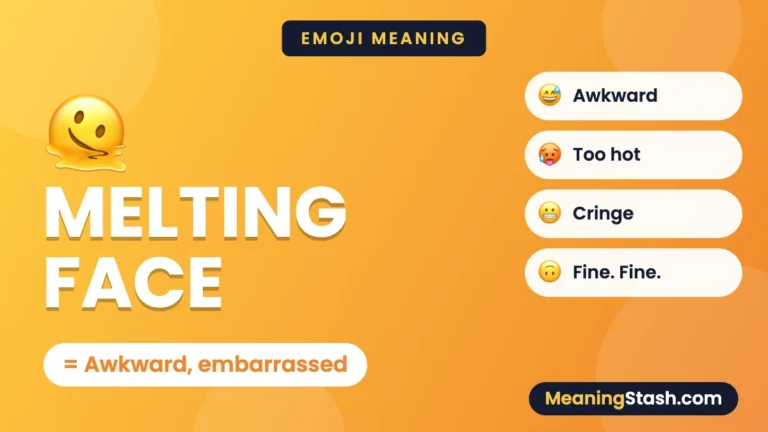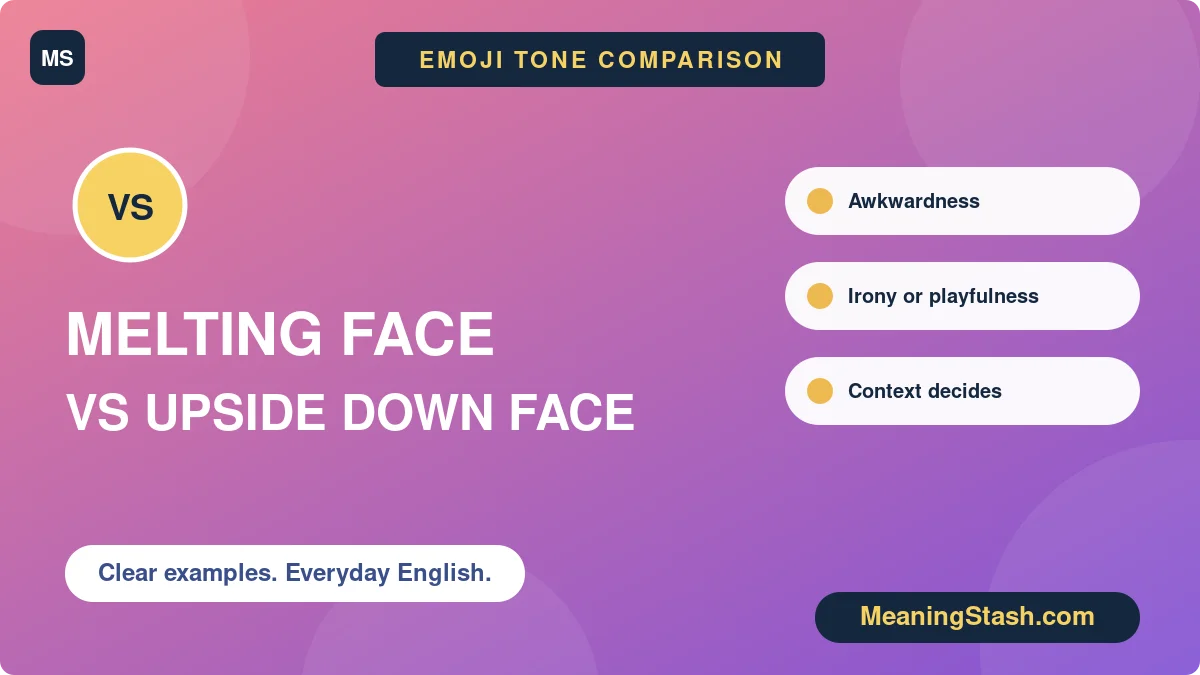
🫠 Melting face vs 🙃 upside down face compares two smiling emoji that can suggest something other than straightforward happiness. The 🫠 melting face often emphasizes awkwardness, heat or feeling overwhelmed. The 🙃 upside-down face often adds irony, playfulness or a sense that a situation is absurd.
Their uses overlap. Neither one automatically means anger, passive aggression or a mental health condition.
🫠 Melting face vs 🙃 upside down face at a glance
| Emoji and name | Common use | Example |
|---|---|---|
| 🫠 Melting face | Embarrassment, heat, overwhelm or a joking loss of composure. | “I sent the message to the wrong chat 🫠 Melting Face” |
| 🙃 Upside-down face | Irony, playful absurdity or a smile at an awkward situation. | “Another meeting about reducing meetings 🙃 Upside-Down Face” |
What the 🫠 melting face emphasizes
The face’s melting shape can suggest “I’m dissolving from embarrassment” or “This is a lot.” In a heat-related sentence, it may be a more literal visual joke. The 🫠 melting face emoji meaning includes these different contexts.
“You wrote that lovely note for me? 🫠 Melting Face” can instead express being emotionally softened or bashful. The symbol does not always describe a bad experience.
What the 🙃 upside-down face emphasizes
The inverted smile can add “of course that happened,” “this is ridiculous” or playful silliness. A message such as “My alarm rang on my day off 🙃 Upside-Down Face” may communicate ironic frustration.
It can also appear in a light joke without frustration. Do not assume that every upside-down smile is secretly hostile. If an important message sounds unclear, ask what the person intends.
Try the same sentence with each face
“I forgot my own password 🫠 Melting Face” can emphasize personal embarrassment. “I forgot my own password 🙃 Upside-Down Face” can emphasize the absurdity. Either version may also be read as a general joking complaint.
“Everything is going perfectly 🙃 Upside-Down Face” may be ironic, especially if the previous messages describe problems. Without those previous messages, the tone remains uncertain. The emoji is a cue rather than a complete explanation.
How to reply
- A minor mistake: “That happens. Can you correct it?”
- A workload problem: “Which task is the most urgent?”
- A shared joke: A light acknowledgment can fit.
- A possible disagreement: “Are you joking, or is something bothering you?”
Do not escalate a disagreement by assuming sarcasm. In a serious exchange, describe the issue plainly and give the other person room to clarify.
Other faces that can overlap
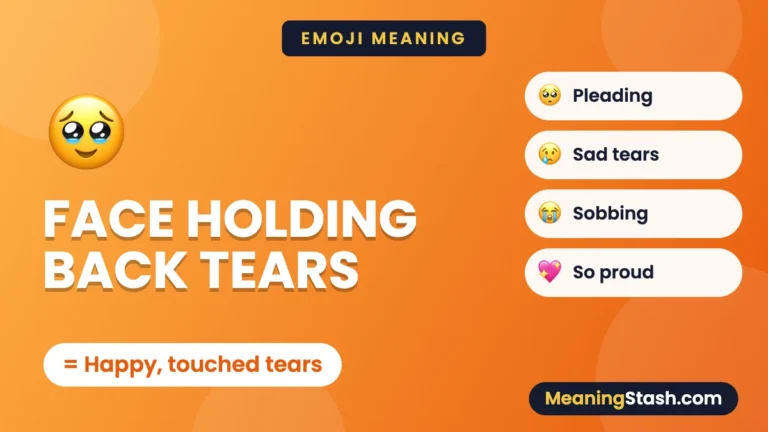
The 💀 skull emoji can react to something funny or embarrassingly awkward. The 🥹 face holding back tears can express being moved, proud or sad. These symbols share some emotional territory without becoming interchangeable.
If you want precise wording, compare synonyms for awkward. “Embarrassed” describes a person’s feeling, while “inconvenient” describes a different kind of problem. Choose the sense that fits.
When words are the better choice
For work instructions, sensitive feedback or a real problem, write the intended meaning: “I’m concerned about the extra deadline,” or “That was a joke.” Replacing an uncertain smile with a clear sentence can prevent unnecessary conflict.
When explaining either emoji to someone else, include the readable name. Different devices may draw the smile or melting shape differently, and an older device may show an unsupported symbol.
Frequently asked questions
Does 🙃 upside-down face always mean sarcasm?
No. Irony is common, but playfulness and absurdity are also possible.
Does 🫠 melting face mean someone is stressed?
It may suggest overwhelm, but the emoji alone cannot establish a person’s condition or how serious the situation is.
Which emoji is more negative?
There is no universal scale. The sentence, relationship and sender’s habits matter more.
Can both emoji appear in one message?
Yes. A sender may combine them for emphasis, but that does not create a separate fixed meaning.