Toward the end vs at the end is a difference between approaching a finishing point and reaching that point. “Toward the end of the meeting” means during its later part. “At the end of the meeting” places something at its conclusion. Neither expression gives an exact clock time on its own.
Choose the phrase that matches the timing you intend. If you are arranging a delivery or deadline, add a date or time rather than asking the reader to guess.
Toward the end vs at the end: the main difference
| Expression | Timing | Example |
|---|---|---|
| Toward the end | In the later part, approaching the finish. | We discussed the budget toward the end of the call. |
| At the end | At the conclusion or final point. | The chair thanked everyone at the end of the call. |
| By the end | No later than a stated endpoint. | Please send your notes by the end of Friday. |
| Until the end | Continuing up to the final point. | I stayed until the end of the call. |
These phrases describe different relationships to the same endpoint. Changing one can change the instruction, even when the sentence remains grammatical.
What toward the end of the month means
“Toward the end of the month” usually means during its later part. It does not universally mean the last three days, the last week or a particular date. The amount of time depends on the situation.
“The repairs should finish toward the end of June” is an approximate estimate. “The repairs will finish on June 28” is a specific commitment. Use the second kind of wording when someone must plan around the date.
Examples with meetings, stories and journeys
- Meeting: “Toward the end, the questions became more practical.” The discussion changed during the later part.
- Meeting: “At the end, we agreed on three actions.” The agreement is presented as a concluding event.
- Story: “A new character appears toward the end.” The character appears late in the story, not necessarily in its last scene.
- Journey: “There is a café at the end of the road.” Here the endpoint is a physical location rather than a time.
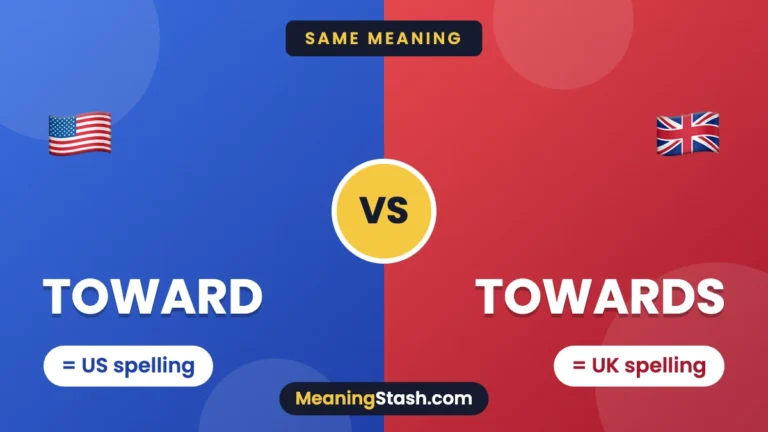
For the broader spelling choice, toward and towards are both standard forms. “Towards the end” follows the same timing distinction; adding the s does not make the endpoint more precise.
At the end is different from in the end
“At the end” identifies a final point: “There is a summary at the end of the report.” “In the end” means finally or ultimately: “In the end, we chose the smaller venue.” It describes the eventual outcome, not necessarily a location in the report or event.
You can inspect the different senses of end when a sentence mixes a physical endpoint, a conclusion and an intended result.
Make deadlines more precise
“Send it toward the end of Friday” leaves the recipient to interpret a broad period. “Send it by 4 p.m. on Friday, London time” gives a usable deadline. Spell out the relevant date and time zone when people work in different locations.
The same problem occurs with EOD deadlines: a familiar phrase is not a shared clock time. If you receive an unclear instruction, ask “Which date and time should I work to?”
Practice: choose the meaning you need
- You need the file no later than Friday. Choose “toward,” “at” or “by” the end of Friday.
- The audience clapped when the performance finished. Choose “toward” or “at” the end.
- The speaker became tired during the final section. Choose “toward” or “by” the end.
Answers: 1. By, because you are setting a latest completion point. 2. At, because the applause follows the conclusion. 3. Toward, because you mean a late stage rather than a deadline.
Frequently asked questions
Is toward the end the same as near the end?
They often overlap. Both can describe the later part of a period, but neither specifies an exact amount of time.
Does at the end mean after?
Not exactly. At locates an event at the concluding point; after places it later. Use “after the meeting” if that sequence matters.
Can I write towards the end?
Yes. Towards and toward are both standard here. Choose the spelling used by your audience or style guide.
Is by the end better for a deadline?
It expresses a latest completion point more clearly, but you should still state an exact date, time and time zone when needed.