Evil eye vs hamsa meaning compares related but different ideas and designs. The evil eye can refer to a belief about harm associated with an envious or harmful gaze. A nazar amulet commonly uses an eye design. A hamsa is a hand-shaped symbol that may include an eye and has different cultural and religious associations.
People may wear either design for tradition, identity, personal meaning or appearance. Wearing one does not establish a person’s religion or prove that it provides supernatural protection.
Evil eye vs hamsa meaning at a glance
| Term | What it can refer to | Visual clue |
|---|---|---|
| Evil eye | A belief, a harmful gaze or a casual name for related jewelry. | No single required object. |
| Nazar amulet | An object associated with protection from the evil eye. | Often concentric eye-like circles. |
| Hamsa | A hand-shaped symbol with varied cultural meanings. | A stylized hand, sometimes containing an eye. |
The belief and the protective object are different
Someone may say “an evil eye bracelet” when they mean a bracelet carrying an eye-shaped charm. Strictly separating the belief from the object makes explanations clearer: the feared evil eye and an amulet intended to ward it off are not the same thing.
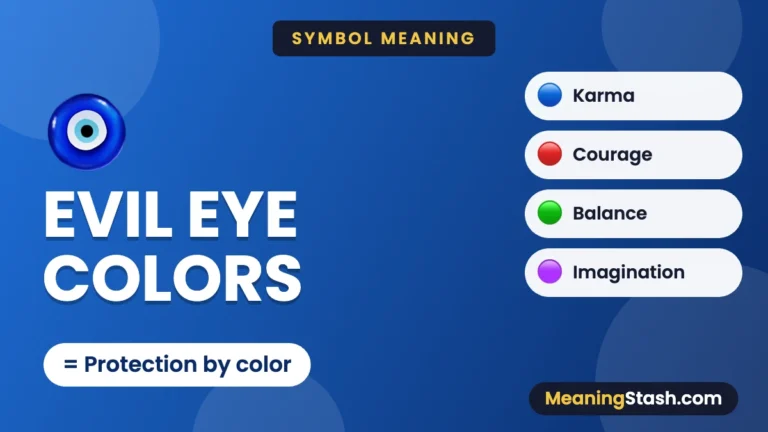
The evil eye color meanings discuss common modern associations and why colors should not be treated as one universal protective code. A blue design is recognizable, but it does not prove a particular power or outcome.
What distinguishes a hamsa?
The hand shape is the main visual distinction. Hamsa designs can be associated with Jewish, Muslim and other cultural contexts, and the names or meanings attached to them vary. An eye placed in the palm combines two motifs rather than making the hand disappear as a distinct symbol.
A simple product description may call all such jewelry “evil eye,” but a careful explanation should identify what is actually visible. “A hand-shaped charm containing an eye motif” is more precise than assuming every design has the same history.
Can a design include both?
Yes. A necklace can show a hamsa hand with an eye inside it, and a bracelet can carry separate hand and eye charms. Combining motifs does not establish a universally agreed increase in spiritual strength.
Ask the maker or wearer about the intended cultural meaning when that matters. A retailer’s marketing description may be one interpretation rather than an authoritative account of every tradition.
What not to infer from the symbol
- A person’s religion, nationality or beliefs from jewelry alone.
- That one color guarantees health, wealth or relationship success.
- That a broken charm proves someone sent negative energy.
- That all eye symbols, including the Eye of Horus, share one identity.
As with 111 angel-number interpretations, distinguish personal or cultural beliefs from factual predictions. A symbol can be meaningful without being evidence about an upcoming event.
Describing the symbols respectfully
Use observable design language first, then attribute an interpretation: “The maker describes this hand charm as a symbol of protection.” That wording separates the physical object from the claim made about it.
The meaning of amulet helps identify the category of object, while the word symbol describes something that represents an idea. Neither definition verifies that a protective effect occurs.
Frequently asked questions
Are the evil eye and hamsa identical?
No. The first can name a belief or an eye-related motif; the hamsa is identified by its hand shape.
Can a hamsa contain an eye?
Yes. Many designs combine a hand outline with an eye motif.
Does a blue charm guarantee protection?
No reliable guarantee follows from a charm’s color. Such interpretations belong to belief and tradition.
Can I identify someone’s religion from a hamsa necklace?
No. People wear symbols for many reasons, including heritage, gifts, fashion and personal meaning.